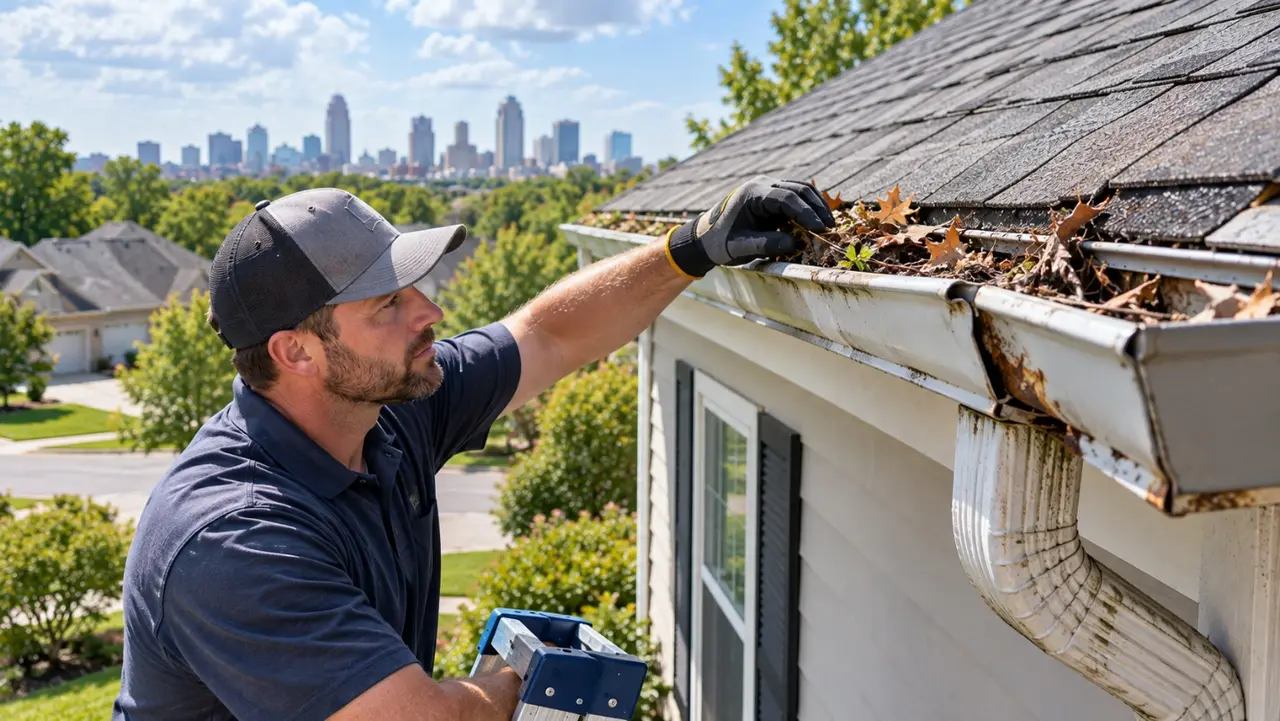
Why Storm Season Timing Matters for Kansas City Gutters
Kansas City storm season brings intense, short-burst rainfall and periodic hail, and a gutter system with an existing weakness rarely survives that kind of test gracefully. A joint that's been weeping quietly for months, or a hanger that's already half-pulled from the fascia, tends to fail completely the first time a real storm pushes the system to its limit. Catching these problems before storm season means a small repair now instead of water damage, a detached run, or a much larger bill later.
7 Signs Your Kansas City Gutters Need Repair
1. Leaking Seams, End Caps, or Miters
Sealant fails over time, and once a joint separates, water runs down the corner of the house instead of through the downspout where it belongs. This is one of the most common repairs on sectional systems, since every ten-foot joint is a place the sealant can eventually give out under Kansas City's freeze-thaw cycles.
2. Sagging Runs or Gutters Pulling Away From the Fascia
A visible dip in the middle of a run usually means spikes have backed out, hangers have stripped, or the fascia behind them has started to rot. Left alone, the sag gets worse with every heavy rain or wet snow, and eventually the whole run can pull loose from the house.
3. Incorrect Pitch and Standing Water
A run that doesn't fall consistently toward its outlet holds water instead of draining it. Standing water breeds mosquitoes, grows sediment, adds constant weight to the hangers, and eventually contributes to the run pulling away from the house entirely.
4. Water Overshooting the Gutter in Heavy Rain
If water shoots past the gutter during a hard rain even though the trough itself is clean, the cause is usually an undersized gutter, too few downspouts, a roof valley dumping onto a short run, or a missing gutter apron letting water get behind the system instead of into it.
5. Clogged or Disconnected Downspouts
Blocked outlets, crushed elbows, separated bands, missing extensions, and buried discharge lines that no longer drain all show up the same way: water pooling at the base of the downspout instead of moving away from the foundation. A downspout that isn't running clear defeats the purpose of the entire system above it.
6. Water Running Behind the Gutter and Rotting Fascia
This is almost always a drip edge or gutter apron problem rather than a gutter problem itself. Without proper apron, water leaves the shingle edge and runs behind the gutter instead of into it, quietly rotting fascia in a spot that's easy to miss until the board is already soft.
7. Hail Dents, Wind Damage, or a Detached Run
Documented hail dents, wind-bent sections, and ice damage from a previous storm season are worth repairing before the next one arrives, and a run that has already come partly loose from the house needs to be secured before it fails completely during the next high-wind event.
Repair or Replace? How to Tell Which One You Need
Repair is usually the right answer when the gutter body is sound and the problem is localized: a few failed hangers, one leaking miter, a single crushed downspout, storm damage to one section, or a pitch correction on a single run. Replacement is usually the better call when the gutter is sectional and leaking at multiple seams, when the metal is rusted, split, or dented across most of the house, when the system is undersized for the roof it's draining, or when repairs would cost more than half of a new seamless system that would last another two decades. A trustworthy contractor tells you honestly which situation you're in rather than upselling a full replacement you don't need yet.
What Gutter Repair Costs in Kansas City
Most residential gutter repairs in the Kansas City metro fall between 100 and 550 dollars, depending on what failed and how much of the house is involved. Resealing a joint, replacing hangers on one run, or reattaching a downspout sits at the low end. Re-pitching multiple runs, replacing sections of gutter, or repairing fascia behind the gutter sits higher, with fascia and soffit repair typically running 18 to 24 dollars per linear foot. A good contractor quotes every repair before starting the work.
What to Expect During a Gutter Repair Visit
- A full diagnosis of the cause, not just a reseal of whatever is visibly leaking
- An honest repair-or-replace recommendation before any work begins
- An itemized, upfront price, with the quoted number honored even if a repair turns out to take more work than expected
- A check of nearby hangers, seams, and pitch, so a second problem doesn't surface right after the first one is fixed
What Happens If You Wait Until After the Storm?
A joint that's weeping quietly in August is often a joint that fails outright during a September storm, and a hanger that's half-pulled loose in spring can let an entire run come off the house during summer's heaviest rain. Waiting rarely makes a small gutter problem go away; it usually turns a 150-dollar repair into a full section replacement, or turns a manageable fascia repair into a larger carpentry job once the wood has been wet for another season.
Why Kansas City Homeowners Trust Us With Repairs
Local roofing companies use Integrity Exteriors as their gutter subcontractor, and homeowners regularly bring us in to diagnose problems a previous installer couldn't solve. When a repair turns out to be more work than expected, the price we quoted is the price you pay, and more than one small repair has been fixed on the spot at no charge because that was genuinely all it needed.
Common Causes Behind Repeat Gutter Repairs
Some homes seem to need a repair almost every year, and it's rarely bad luck. A gutter that's undersized for the roof it drains will keep overshooting no matter how many times a seam gets resealed. A run installed with a poor pitch will keep collecting standing water until the pitch itself is corrected, not just patched. And fascia that's already soft from an earlier, unaddressed leak will keep failing hangers until the wood underneath is actually replaced. Repeat repairs are usually a sign that the original problem was treated as a symptom rather than a cause.
What a Storm-Ready Kansas City Home Looks Like
Going into storm season with confidence means every run holds a consistent pitch, every hanger is secured into solid fascia, every downspout drains freely, and every seam and miter is sealed rather than just caulked over a known weak spot. A quick walk-around after a hard rain, checking for overshoot, drip lines, and standing water, is often enough to catch a developing problem before it becomes a storm-season emergency call.
How Often Should You Inspect Gutters for These Signs?
A walk-around twice a year, once before spring storm season and once before winter, catches most of these seven signs before they turn into an emergency. Homes with a history of repairs, older sectional systems, or roof valleys that concentrate water into one run benefit from checking a little more often, especially right after any storm that included high wind or hail.
Areas We Provide Gutter Repair Across the Kansas City Metro
Integrity Exteriors repairs gutters throughout Kansas City, MO and Kansas City, KS, along with Overland Park, Olathe, Lee's Summit, Independence, Shawnee, and the rest of the metro, with every repair completed by our own trained crews.
When to Call Immediately Instead of Waiting
A run that's already come partly loose from the house, a downspout that's completely detached, or active water intrusion into the home are all worth a same-week call rather than something to note for a future estimate. Everything else on this list is worth addressing before storm season, but these three shouldn't wait at all.
Getting Your Gutters Storm-Ready in Kansas City
If you've noticed any of these seven signs, the time to call is before the next round of Kansas City storms, not after. Request a free estimate or contact Integrity Exteriors for an honest repair-or-replace assessment across the Kansas City metro.