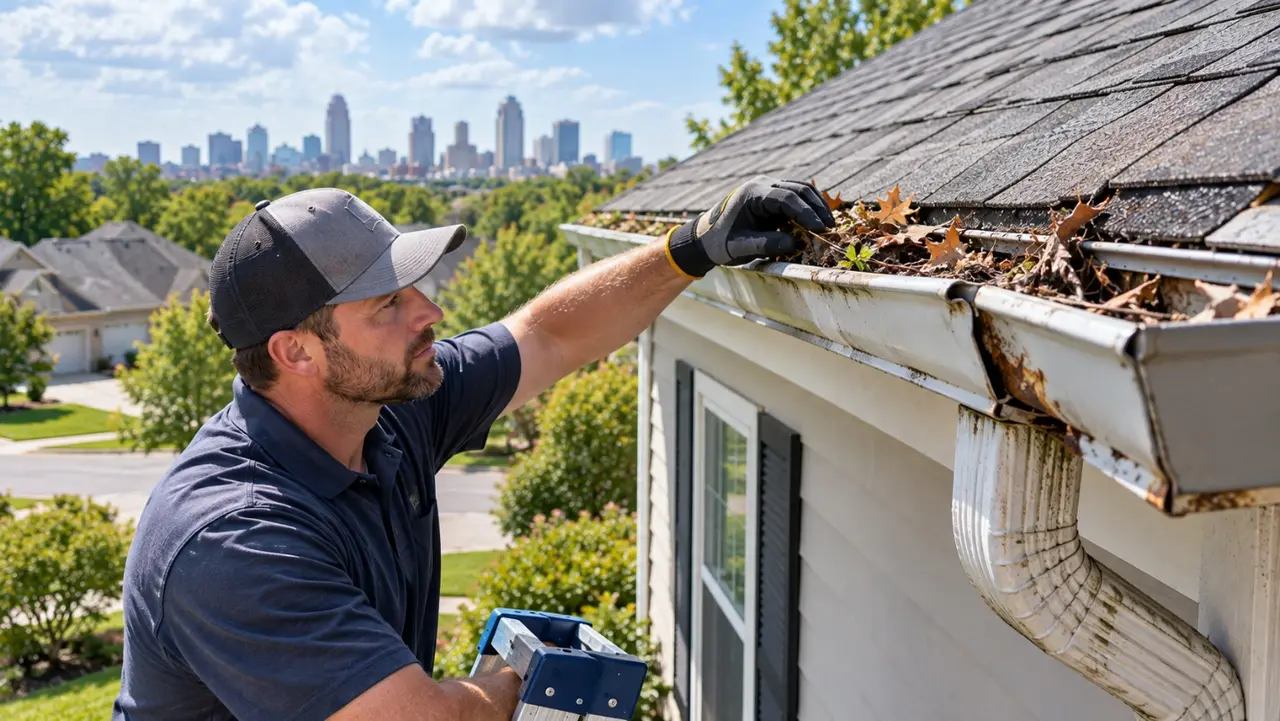
Kansas City's Climate Is Hard on Gutters
Few climates put gutters through as many extremes as Kansas City. The metro averages close to 40 inches of precipitation per year, with the wettest months usually in May and June. Spring brings severe thunderstorms and hail. Winter brings snow, sleet, freezing rain and temperatures that swing above and below freezing many times each season. Summer pushes heat into the upper 90s and beyond.
Each of these conditions stresses your gutters in a different way, and the damage builds year after year. Understanding how it happens helps you spot problems early and protect your roof edge, siding and foundation.
How Heavy Rain Damages Gutters
Overflow From Undersized Gutters
Kansas City thunderstorms can drop an inch or more of rain in under an hour. A roof sheds that water into the gutters all at once. If the gutters are undersized or the downspouts are too small or too few, water spills over the front edge. Repeated overflow soaks fascia boards, stains siding and saturates the soil around the foundation.
Weight and Strain
Water is heavy. A 5-inch gutter holds about 1.2 gallons per foot, which is roughly 10 pounds of water per linear foot when full. A clogged 40-foot run can carry several hundred pounds during a storm. That weight strains hangers and fascia and is a common reason gutters begin to sag.
Erosion and Foundation Problems
When gutters fail during heavy rain, water lands next to the foundation. Kansas City's expansive clay soil swells when it is saturated and shrinks as it dries. Over time, this movement can crack foundation walls, cause basement leaks and shift concrete slabs, walkways and patios.
How Hail and Wind Damage Gutters
Hail is common across the Kansas City metro during spring and early summer. Even moderate hail can dent aluminum gutters and downspouts, crush the front lip and crack sealed seams. Dented gutters may hold water in low spots and develop leaks at stressed joints. Strong winds that accompany these storms can lift loose sections, bend downspouts and blow debris such as branches and shingle granules into the trough.
After a hail or wind storm, look for dents along the face of the gutter, bent downspouts, separated corners and granules collecting at downspout outlets. These are often signs of roof damage as well, and they are among the most common signs your gutters need to be replaced.
How Snow and Ice Damage Gutters
Snow Load
Kansas City averages around 18 inches of snow per season, sometimes arriving in heavy bursts. Wet snow sliding off a roof collects in the gutters and freezes. Snow and ice can add significant weight to every foot of gutter, which pulls on hangers and can bend or tear gutters away from the roof edge.
Ice Dams
Ice dams form when heat escaping from the attic melts snow on the upper roof. The meltwater runs down to the colder eaves and refreezes at the gutter, creating a ridge of ice. Water then backs up behind the ice, can work under shingles and may leak into attics, walls and ceilings. The gutters themselves are not the cause of ice dams, but ice-filled gutters make the problem worse and suffer heavy weight and stress as the ice builds.
Freezing Rain
Kansas City is also vulnerable to ice storms, when freezing rain coats every surface. Ice accumulates on the gutter, hangers and downspouts, adding weight and causing downspouts to freeze solid. When the next round of rain arrives, frozen downspouts cannot drain, and water overflows or backs up.
How Freeze-Thaw Cycles Damage Gutters
Freeze-thaw cycles may be the most damaging and least visible threat. Kansas City often swings above and below 32 degrees many times in a single winter, sometimes within the same day.
- Trapped water expands: water expands by about 9 percent when it freezes. Water sitting in clogged gutters or low spots pushes against seams, corners and end caps as it turns to ice.
- Sealant fails: repeated expansion and contraction breaks down the sealant that holds sectional gutter joints and corners together.
- Fasteners loosen: metal gutters expand and contract with temperature changes. Over many cycles, spikes and screws work loose from the fascia.
- Fascia deteriorates: water that leaks at seams soaks into wood, freezes, expands and accelerates rot.
This is why many homeowners notice new leaks and sagging in March and April, right after winter, even though no single storm seemed severe.
How Summer Heat Adds to the Damage
Summer heat expands gutters and dries out sealant, making it brittle. Vinyl gutters are especially vulnerable, becoming soft and warped in high heat and brittle in cold weather. Combined with winter freezes, these temperature swings shorten the life of sectional systems and poorly installed gutters.
Warning Signs of Weather-Related Gutter Damage
- Sagging sections or gaps between the gutter and fascia.
- Drips or streams at seams, corners and end caps.
- Dents, crushed lips or bent downspouts after hail.
- Peeling paint, water stains or soft wood on fascia and soffit.
- Icicles forming along the front of the gutters or behind them.
- Puddles, erosion or damp basement walls after storms.
How to Protect Your Gutters From Kansas City Weather
Keep Gutters Clean Before Winter and Spring
Clean gutters in late fall after the leaves drop and again in late spring after seed and pollen season. Clean gutters drain meltwater and rainwater instead of trapping it where it can freeze or overflow.
Size Gutters and Downspouts Correctly
Six-inch gutters and 3x4 downspouts carry more water and clear faster during heavy storms and snowmelt. Correct sizing reduces overflow, standing water and ice buildup.
Use Hidden Hangers Spaced for Snow Loads
Hidden hangers screwed into solid fascia hold far better than older spike-and-ferrule systems. Closer spacing, often every 24 inches, adds strength for snow and ice weight.
Choose Seamless Gutters
Seamless gutters remove most of the joints that freeze-thaw cycles attack. Fewer seams mean fewer leaks and less fascia damage.
Add Gutter Guards
Micro-mesh gutter guards keep debris out so water drains instead of pooling and freezing in place.
Address Attic Insulation and Ventilation
Since ice dams start with attic heat loss, improving insulation and ventilation is the long-term fix. Your gutters will last longer when ice dams are under control.
Schedule Seasonal Inspections
A quick professional inspection in early spring and after major storms catches loose hangers, failing seams and fascia damage before they become expensive problems.
A Seasonal Gutter Care Calendar for Kansas City
- March to April: inspect for winter damage, reseal or repair seams, tighten hangers and confirm downspouts drain freely before storm season.
- May to June: clear maple seeds, oak tassels and cottonwood fluff, and watch for overflow during heavy thunderstorms.
- July to August: check for hail dents, bent downspouts and loose sections after summer storms.
- November to December: clean gutters after the leaves drop and make sure water can drain before the first hard freeze.
- January to February: watch for icicles, ice dams and sagging, and avoid chipping ice out of gutters with tools that can puncture metal.
Storm Damage, Insurance and Documentation
Many homeowners insurance policies cover sudden damage from hail, wind, falling limbs or ice storms. Gradual wear, rust and damage from lack of maintenance are typically excluded. After any major storm, photograph damaged gutters, downspouts and fascia from several angles, note the date and keep receipts for emergency repairs. A professional inspection report can help separate storm damage from normal aging and support your claim.
Repair or Replace After Weather Damage?
Isolated damage, such as a single dented downspout, one loose section or a leaking corner, is usually a straightforward repair. When damage spans multiple runs, the gutters are older sectional or vinyl systems, or the fascia behind them is rotted, replacement with seamless aluminum gutters is often the more cost-effective and durable solution for Kansas City weather.
Frequently Asked Questions
Can freeze-thaw cycles damage gutters?
Yes. Water trapped in gutters expands as it freezes, cracking sealant, loosening fasteners and stressing seams. Repeated cycles cause leaks and sagging over time.
Can snow and ice pull gutters off a house?
Yes. Heavy snow and ice add significant weight, especially to clogged gutters, which can bend hangers, pull fasteners from fascia and tear gutters loose.
Does hail damage gutters?
Hail can dent aluminum gutters and downspouts, crush the front lip and loosen seams. Storm damage is often covered by homeowners insurance.
How do I protect my gutters before winter in Kansas City?
Clean gutters after leaf drop, check hangers and seams, make sure downspouts drain freely and consider gutter guards and attic ventilation improvements.
When should gutters be inspected in Kansas City?
Inspect gutters in early spring after winter, in late fall after leaf drop and after any major hail, wind or ice storm.