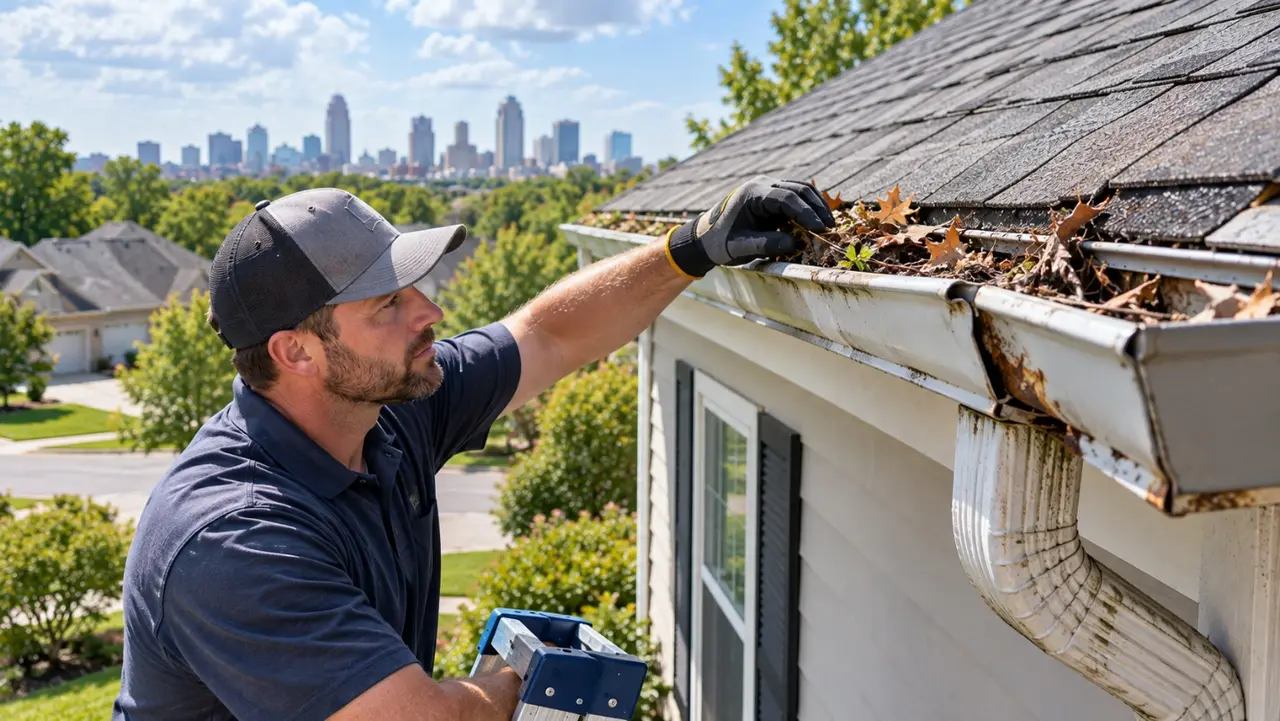
Why Timing Matters Before Kansas City Storm Season
Kansas City's most intense weather usually arrives between April and June, when severe thunderstorms, hail and heavy downpours sweep across Missouri and Kansas. A gutter system that limps through light rain often fails completely during these storms. Water pours over the edge, loose sections tear away in high winds and hail finishes off gutters that were already weak.
Replacing gutters before storm season gives you control over timing, product choice and price. Waiting until after a failure often means rushed decisions, higher demand for installers and repair bills for the damage the water already caused. Here are the seven clearest signs it is time to replace.
1. Gutters Are Sagging or Pulling Away From the House
Gutters should run in a straight line along your roof edge with a slight, consistent slope toward each downspout. When sections dip, bow or separate from the fascia, the hangers have failed or the wood behind them has rotted. Older systems held up with spikes and ferrules are especially prone to this as the spikes back out over years of expansion and contraction.
A single sagging section can often be fixed with a straightforward gutter repair. When sagging appears along several runs, or the fascia behind it is soft, replacement with new seamless gutters and hidden hangers is usually the more reliable fix.
2. Leaks, Cracks and Separated Seams
Sectional gutters have a joint roughly every ten feet, and each joint depends on sealant to stay watertight. Kansas City's freeze-thaw cycles break that sealant down. Look for drips along the run during rain, dark streaks on siding below a seam or small cracks and splits in the gutter body.
One leaking seam is a repair. Leaks at multiple seams, or new leaks appearing every season, signal a system at the end of its life. Seamless gutters remove most of those joints entirely.
3. Rust, Peeling Paint and Corrosion
Orange spots, flaking paint and pitting are signs of corrosion, most common on older galvanized steel gutters. Rust weakens the metal from the inside of the trough outward, so by the time you see it from the ground, the damage is often well advanced. Corroded gutters develop holes, lose strength and can tear loose under the weight of water or ice.
4. Water Damage on Fascia, Soffit or Siding
Your gutters exist to keep water off your home. When they fail, the first casualties are usually the fascia boards behind them and the soffit beneath. Watch for:
- Peeling paint or dark water stains on fascia boards.
- Soft, spongy or crumbling wood along the roof edge.
- Mold, mildew or streaking on siding below the gutters.
- Water stains on soffit panels or around attic vents.
Rotted fascia should be replaced at the same time as the gutters. Installing new gutters on rotted wood leads to loose hangers and sagging within a short time.
5. Pooling Water, Erosion or Basement Moisture
Some of the most serious signs show up on the ground, not on the roof. Puddles along the foundation, washed-out mulch beds, exposed roots, gullies in the soil and damp spots in the basement all point to water that is escaping your gutter system.
Kansas City's clay-heavy soil expands when saturated and shrinks as it dries. Repeated cycles of overflow can push on foundation walls, open cracks and send water into finished basements. Foundation repair and waterproofing cost far more than a new gutter system, which makes this sign one you should never ignore.
6. Gutters Overflow Even When They Are Clean
If your gutters are free of debris and still spill water over the front edge during a heavy storm, the system is either undersized, improperly pitched or short on downspouts. Many homes across Johnson County and Jackson County were built with standard 5-inch gutters and a single 2x3 downspout per run, which is often not enough for steep or large roof planes.
Replacing with 6-inch seamless gutters and 3x4 downspouts, along with correctly placed outlets, permanently fixes this type of overflow.
7. Your Gutters Are 20 or More Years Old or Need Constant Repairs
Age is a reliable predictor. Typical lifespans in the Kansas City climate are:
- Vinyl gutters: about 10 to 20 years, often less due to cold-weather cracking.
- Galvanized steel gutters: about 15 to 20 years before rust takes over.
- Seamless aluminum gutters: about 20 to 30 years with proper installation.
- Copper gutters: 50 years or more.
If your system is near the end of its expected life and you are calling for repairs every year, the combined cost of those repairs quickly approaches the cost of a new system that comes with a fresh warranty.
Gutter Repair vs. Gutter Replacement: How to Decide
Repair makes sense when the problem is isolated, such as one loose hanger, a single leaking corner or a damaged downspout elbow on an otherwise healthy system. Replacement makes sense when:
- Problems appear in several areas at once.
- The gutters are undersized for your roof.
- Corrosion, cracking or hail dents run along multiple sections.
- The fascia behind the gutters needs replacing.
- Repair costs over the past few years add up to a large share of replacement cost.
Storm Damage and Homeowners Insurance
Hail and wind damage are common across the Kansas City metro. If a recent storm dented, bent or tore your gutters, document the damage with photos and dates as soon as possible. Many homeowners insurance policies cover sudden storm damage to gutters, often alongside roof claims. Wear, age and lack of maintenance are typically not covered, so an inspection that separates storm damage from normal aging is valuable.
What to Expect From a Gutter Replacement in Kansas City
A professional gutter replacement typically includes removing the old system, inspecting and repairing fascia, forming seamless gutters on-site to the exact length of your roofline, installing hidden hangers, setting proper pitch, adding correctly sized downspouts and directing water away from your foundation. Most homes are completed in a single day. Seamless aluminum gutter replacement in the Kansas City area generally runs $10 to $20 per linear foot installed, depending on size, home height and fascia condition.
How to Inspect Your Gutters From the Ground
You do not need to climb a ladder to spot most warning signs. Use this simple checklist during or right after a steady rain:
- Stand back from the house and sight down each gutter run to check for dips, bows or gaps at the fascia.
- Watch the front edge for water spilling over, especially near roof valleys and inside corners.
- Check each seam, corner and end cap for drips or steady streams.
- Confirm water is flowing out of every downspout and landing at least four to six feet from the foundation.
- Look for mulch washouts, exposed roots, puddles or muddy splash marks along the foundation.
- Check the basement or crawl space for damp walls, musty odors or water stains after storms.
Take photos of anything unusual. Clear photos help a gutter professional understand the problem before the inspection and help document storm damage for insurance.
Upgrades Worth Considering When You Replace
Replacement is the ideal time to fix the design problems that shortened the life of your old system. Many Kansas City homeowners choose to upgrade to 6-inch gutters for more capacity, switch to 3x4 downspouts for faster drainage, add hidden hangers spaced closer together for snow and ice loads, install a drip edge or gutter apron to stop water from running behind the gutter and add micro-mesh gutter guards to reduce future cleanings. Each upgrade costs less when completed during replacement than as a separate project later.
Do Not Wait for the Next Storm to Find Out
A quick walk around your home during or right after a rainstorm will tell you a lot. Look for water spilling over the edge, drips at seams, water pooling near the foundation and sections that look out of line. If you see two or more of the signs above, schedule an inspection with an experienced local gutter company before the next round of severe weather.
Frequently Asked Questions
How do I know if my gutters need to be replaced?
Common signs include sagging, leaks at multiple seams, rust or cracks, fascia rot, foundation water, overflow when clean and gutters older than about 20 years.
How long do gutters last in Kansas City?
Seamless aluminum gutters typically last 20 to 30 years, galvanized steel 15 to 20 years, vinyl 10 to 20 years and copper 50 years or more.
Can sagging gutters be repaired instead of replaced?
Yes, if the sagging is limited to one area and the fascia is sound. Widespread sagging or rotted fascia usually calls for replacement.
Does homeowners insurance cover gutter replacement?
Many policies cover sudden storm damage such as hail or wind. Normal wear, age and poor maintenance are usually not covered.
When is the right time to replace gutters in Kansas City?
Late winter and early spring are ideal, so new gutters are in place before the April through June severe storm season.